
Ministries
Resources
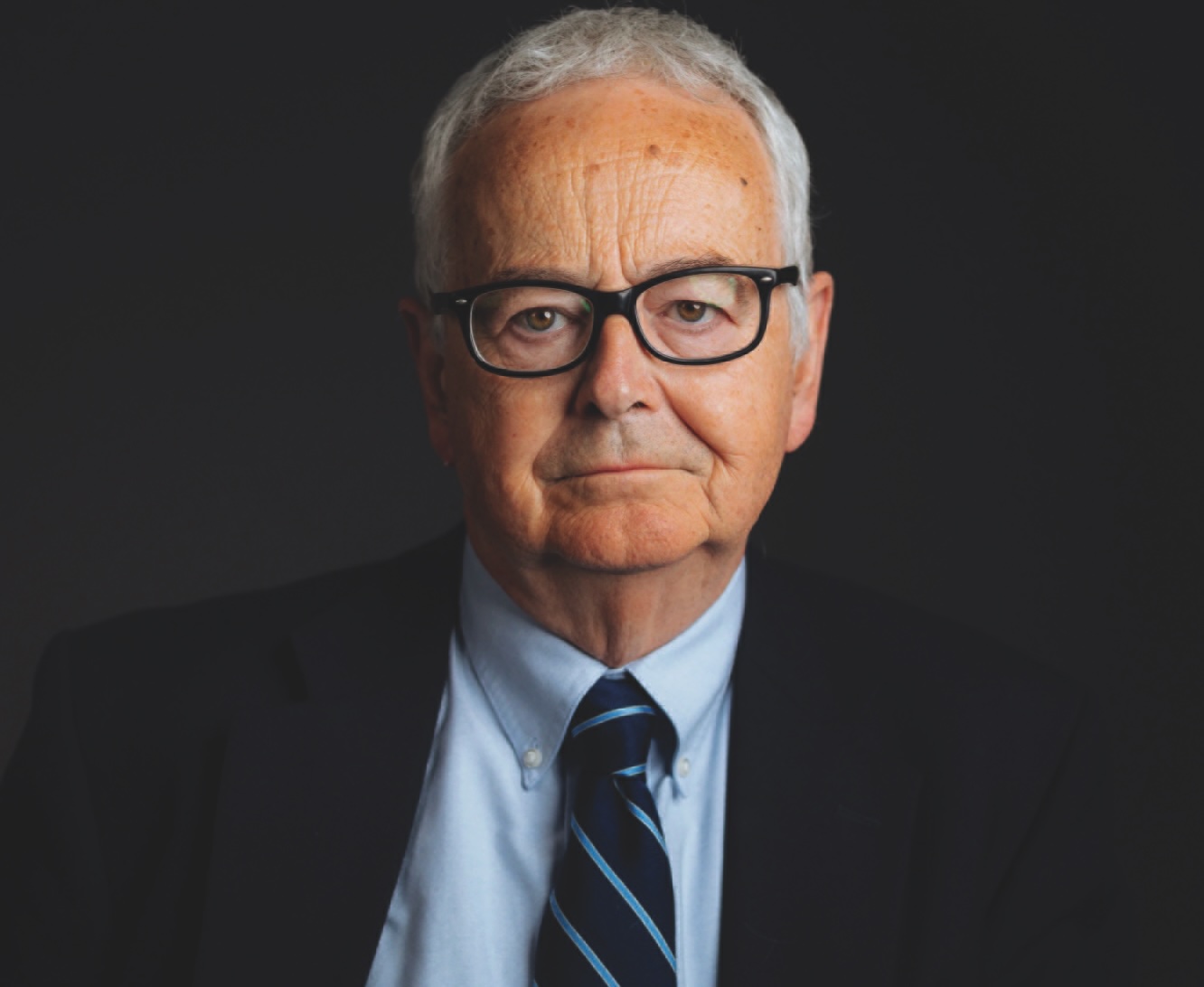
Robert Letham
New Horizons: June 2026
Also in this issue
The Appeal of Eastern Orthodoxy
by Alan D. Strange
Covenant Theology and Eastern Orthodoxy
by Lane G. Tipton
“He [Christ] became man that we might become God.”[1] What a gross violation of the Creator-creature distinction! This is the gut reaction of most Reformed people, I am sure.
Those were the words of Athanasius in De incarnatione (54), written probably in the 330s. He was following a similar statement by Irenaeus in the second century. Deification: it has been and remains central, overarching, to the soteriology of the Eastern church.
Athanasius was one of the staunchest defenders of the deity of the Son. He no more intended that we cease to be human than he said that the Son ceased to be God when he became man. Rather, the eternal Son took human nature into personal union, remaining who he is, with the express purpose that we humans might become partakers of the divine nature in union with him. In short, we are enabled by grace to be in union with God, while remaining who we are.
There are various strands of thought on theosis, as Norman Russell demonstrates in his definitive treatment of the subject.[2] Some we would consider unacceptable, since they border on apotheosis; most commonly known in the West is the form originating with Gregory Palamas (1296–1359), popularized in the last century by Vladimir Lossky, marked by large doses of mysticism and reliant on ascetic and moral effort. However, what Russell calls “Alexandrian Tradition II,” advanced by Athanasius and Cyril, is synonymous with adoption, renewal, salvation, sanctification, grace, illumination, and vivification, viewed in holistic terms rather than as discrete elements.
Becoming more like God means becoming more human, since being human is ultimately being in the image of Christ, who is God. In tandem with the Creator-creature distinction is an inherent compatibility, established by God himself in creation. If that were not so, the incarnation would not have been possible.
Over the years, the East became isolated from the Latin West. The Islamic invasions played a huge part, placing draconian curbs on Christians. Events in the west passed the Greeks by; it had no Middle Ages, no Renaissance, no Reformation, no Enlightenment, no Pope, no magisterium. The issues that arose in the Roman church, the debates over the atonement and justification, were far removed. The late Metropolitan Kallistos Ware wrote that in the West the questions asked by Rome and Protestantism are the same, but the answers are different, whereas in the East the questions themselves are different.[3]
Nevertheless theosis was not something strange to the West. John Calvin, commenting on 2 Peter 1:4, famously wrote: “It is the purpose of the gospel to make us sooner or later like God. It is a kind of deification (quasi deificari).” Earlier, Augustine, in an unpublished sermon on Psalm 81 (82 in the English Bible), wrote: “God made man. God was made man, and God will make us men gods [by adoption and grace].” Aquinas made similar remarks. Recent work has established that such views were widespread in early Reformed theology, not only in Calvin but also with Bucer and Oecolampadius.[4] Hymnwriters like Isaac Watts—“the men of grace have found glory begun below”[5]—and Charles Wesley—“changed from glory into glory till in heaven we take our place”[6]—grasped something of its nature. Wesley summed it up:
He deigns in flesh to appear,
widest extremes to join;
to bring our vileness near,
and make us all divine:
and we the life of God shall know,
for God is manifest below.[7]
The main difference here is that in the West theosis has functioned as one doctrine among others, largely focused on the future in terms of glorification, whereas in the East it is embracive of the whole of salvation.
Leaving aside the transfiguration, due to word limits, let us consider the biblical roots of theosis. In talking of the coming of the Spirit at Pentecost, Jesus promised that to the one who loves him, “my Father will love him and we will come to him and take up permanent residence in him” (John 14:23, my trans.). Who takes up permanent residence within us? The Holy Spirit. Who is the Holy Spirit? Is it merely some kind of influence or power? No, he is one of the Trinity! Does the Spirit work independently? No, all three persons work together inseparably. Thus, the whole Trinity indwells the church and its members, since God is one and indivisible, while it is the Spirit who is personally, hypostatically involved. Can we remain unaffected?
I have already referred to 2 Peter 1:4, a locus classicus, where we are said to have become “partakers of the divine nature.” The following context suggests the fruit of the Spirit is in view, the work of God in the soul of man. Paul wrote that “we all with unveiled face, beholding as in a mirror the glory of the Lord, are being transformed (metamorphoumetha) into the same image from glory to glory, as from the Lord the Spirit” (2 Cor. 3:18, my trans.). Moses’s face shone after meeting with God on Mount Sinai, even though from a transitory encounter; ours is permanent. John adds his voice in pointing to the return of the Lord, when “we shall see him as he is,” not in that poor lowly stable but in resplendent glory, akin to his appearances to the apostle himself and to Saul of Tarsus (Rev. 1:9–20, Acts 9:3–9). At that time “we shall be like him” (1 John 3:1–2). We shall be changed (1 Cor. 15:50–57), made like the glorified Christ (Phil. 3:20–21).
In broad brush strokes, the West (Rome as well as Protestantism) is strongly Pauline; the East is basically Johannine. For the West the main problem is sin, resolved by the atonement and justification. For the East the problem is death, conquered by the resurrection and completed in deification. These are not to be taken as exclusive foci but general emphases.
The West maintains original sin, strongly legal and forensic, but with consequences affecting our whole being. In the East it is called ancestral sin and forensic language is avoided; corruption is transmitted but not guilt. Prior to this, a distinction is usually made between the image and likeness of God, the image signifying reason, free will, and a connection to God, while the likeness consists in deification, something to be attained. This difference in the Eastern view of sin is portentous, but we must bear in mind that Orthodoxy has no definitive pronouncements on the matter, due to its official dogma being limited to the ecumenical councils, the writings of approved fathers, the Bible, and the liturgy. Moreover, there is no rigid uniformity; Kallistos Ware regarded image and likeness as synonymous.
My friend Dr. Panagiotis Kantartzis, senior minister of the First Greek Evangelical Church in Athens, writes:
Although perhaps an oversimplification, we might say that while the Orthodox need to rediscover the “beginning” of salvation, that is justification by faith, Evangelicals need to rediscover the “end” (telos) of salvation, that is our union with Christ and our likeness with God, that is and in that sense our deification.
After all, he adds, referring to Calvin, “it is the intention of the gospel to make us sooner or later like God.”[8]
If one has difficulty assimilating the second part of Athanasius’s comment, “that we might become God,” it may well relate to a problem we have with the first clause, “He became man.” As Athanasius implies, and others like Maximus the Confessor developed, the incarnation and deification are related. Indeed, there is evidence of such problems in recent evangelical aberrations, which have not left the Reformed unscathed. How could the Gordon H. Clark–Van Til controversy on the relationship between divine and human knowledge have been conducted without primary reference to the incarnation? Many recent proposals betray basic ignorance of the classic doctrine. There are a range of contemporary problems I have addressed in my recent book The Eternal Son. Moreover, with our correct emphasis on justification and atonement, is there not a danger of viewing God mainly as a judge who is appeased and losing sight of his being the Father who welcomes us and adopts us in living, transformative union with the natural Son, whose relation to the Father we are given to share in the dynamic power of the Spirit?
If this is so wonderful, someone might say, why don’t you go ahead and become Orthodox (with a capital O)? Get chrismated, grow a long beard, wear a black robe and a silver cross! No, there are clear weaknesses, perhaps stemming from the overall balance of Orthodox soteriology and the dominance of deification.
Justification only by faith is not a problem necessarily; there is no need to renounce it if one converted, no obstacle to a smooth transition. Compared to Rome, Orthodoxy has far fewer obstructive dogmas. But justification only by faith has not played a role in Orthodox faith and life. (Nor has it featured in Rome’s thinking in anything like the way it has done in Protestantism.) While Rome opposed it, Orthodoxy missed it. The germ for it is present in the famous Jesus prayer—“Lord Jesus Christ, Son of God, have mercy on me, a sinner”—which is integral to Orthodox piety.
While the doctrine of penal substitutionary atonement was common, even distinctive, in the early centuries, in recent times in Orthodoxy it has been marginalized or displaced by the teaching that the cross was a triumph, a conquest of the devil and death. While the latter is correct in itself, the heart of the biblical teaching is on substitutionary atonement.
Nevertheless, the main problem in Orthodox soteriology is synergism, in which human free will plays a central part in the process of salvation. It is seen early in the homilies of the great preacher Chrysostom. Addressing passages that stress the sovereign action of God, he backs off and talks about free will. It was powerfully reinforced in the Greek and Syriac churches in their encounter with Islam. Given that Allah was a unitary deity, not personal, with will and power on steroids (islam means “submit”), fatalism was the result, with no room for human agency. Consequently, the Orthodox have rejected categorically the Augustinian and Reformed doctrine of election and predestination, since they misread it through the lens of the Islamic fatalism with which they had been familiar.
To my mind, this synergism follows from Orthodoxy’s weaker view of sin and feeds the stress on asceticism and moral effort. Ironically, while deification is something that only God can effect, the Holy Spirit transforming us into the image of Christ, the Orthodox place an emphasis on human action. It follows that there is no prospect of assurance of salvation, for how can we ever be sure that our own efforts are enough? In the liturgy, effectively unchanged since the fourth century, there is frequent repetition of pleas for mercy. Assurance is foreign for the Orthodox; it cannot be present with a synergistic view of salvation. As Kallistos Ware wrote, “I trust by God’s mercy I am being saved” and “conscious as I am of my own human frailty, I remain between hope and fear right up to the very gates of death.”[9]
There is one practical lesson we can learn from the Orthodox orientation to deification. Orthodox iconography portrays the saints with solid golden halos around their heads. It denotes the fact that they are in the process of deification. If we were to visualize the saints around us in that way, with solid golden halos, it might make a difference in how we treated them, however obnoxious some of them might seem.
More seriously, there is no room for self-satisfied complacency as Reformed Christians. The Westminster Confession and Catechisms are certainly the most comprehensive and thorough statements available. But we have not got it all together. We are not complete. We are not free of faults, weaknesses, or errors. We have not arrived at our destination. We are simply travelers. And so too are the Orthodox.
[1] Αὐτὸς γὰρ ἐνηνθρώπησεν ἵνα ἡμεῖς θεωποιηθώμεν.
[2] Norman Russell, The Doctrine of Deification in the Greek Patristic Tradition (Oxford University Press, 2004).
[3] Kallistos (Timothy) Ware, The Orthodox Church (Penguin, 1978), 9.
[4] Carl Mosser, “John Calvin and Early Reformed Theology” in The Oxford Dictionary of Deification, eds. Paul L. Gavrilyuk, Andrew Hofer, and Matthew Levering (Oxford University Press, 2024), 317–332.
[5] From the hymn “Come We That Love the Lord.”
[6] From the hymn “Love Divine, All Loves Excelling.”
[7] From the hymn “Let Earth and Heaven Combine.”
[8] Panagiotis Kantartzis, The Christian’s Pocket Guide to Eastern Orthodox Theology: An Evangelical Perspective (Christian Focus, 2021), 80.
[9] Cited by Kantartzis, Pocket Guide, 86, 94.
The author is an OP minister and Senior Research Fellow at Union School of Theology in the United Kingdom. He is the author of Through Western Eyes: Eastern Orthodoxy: A Reformed Perspective (Mentor, 2007) and has lectured on Orthodox theology at the Evangelical Center for the Study of Orthodox Theology in Athens and at the Evangelical Reformed Seminary in Ukraine. New Horizons, June 2026.
New Horizons: June 2026
Also in this issue
The Appeal of Eastern Orthodoxy
by Alan D. Strange
Covenant Theology and Eastern Orthodoxy
by Lane G. Tipton
© 2026 The Orthodox Presbyterian Church


